
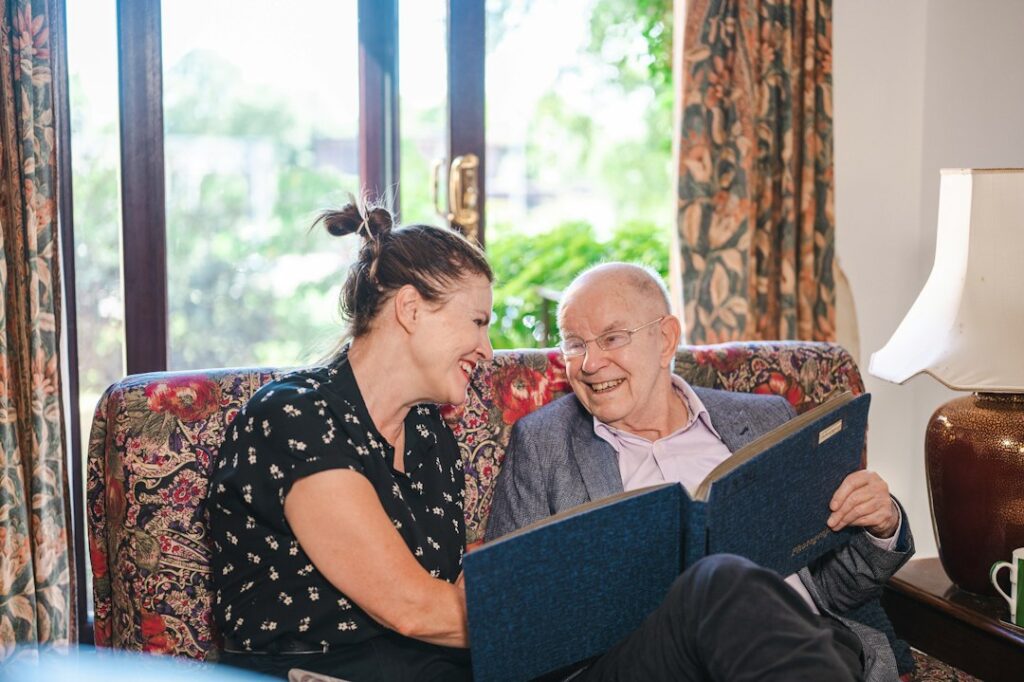
Visiting someone in assisted living should be comfortable, respectful, and flexible. Good etiquette centers on the resident’s preferences, daily routine, privacy, health, and energy level. A thoughtful visit is not measured by how long it lasts, but by whether the resident feels respected and included.
Should visitors call before arriving?
Yes. Calling ahead is generally the most considerate approach, even when a community allows regular visiting hours. Residents may have appointments, meals, activities, personal care, therapy, or rest periods already planned.
An unexpected visit can be tiring or disruptive, especially for someone managing memory loss, chronic illness, or changing energy levels. A brief phone call or message gives the resident a chance to say whether they feel up to a visit and helps avoid arriving during a private or busy time.
Before visiting, ask:
- What day and time is best?
- Would the resident prefer a short visit or a longer one?
- Is there a preferred visiting area?
- Are there any current community rules for guests?
- Should children or pets be included?
If the resident cannot answer the phone, a family member may need to coordinate the visit. The resident’s routine and preferences should remain the priority.
What should visitors do when they arrive?
Visitors should follow the community’s check-in procedures and any posted health or safety instructions. Depending on current policies and the resident’s care needs, guests may need to sign in, wear a mask, use hand sanitizer, or avoid visiting while sick.
A visitor should greet staff courteously without expecting staff members to interrupt care tasks. Staff may be assisting another resident, responding to a request, or handling a time-sensitive responsibility.
The resident’s room is still a personal living space. Knock before entering, wait for permission when possible, and avoid opening drawers, looking through belongings, or rearranging furniture. If the resident shares a room or common space, privacy also applies to the roommate.
How long should a visit last?
There is no universal ideal length. A short visit of 20 to 30 minutes may be more enjoyable than several hours if the resident becomes tired easily. Some residents prefer frequent brief visits, while others enjoy longer family gatherings.
Watch for signs that the resident needs a break:
- Repeated yawning or closing their eyes
- Becoming quiet, irritable, or distracted
- Looking toward the door or clock
- Difficulty following the conversation
- Physical discomfort or restlessness
- Asking the same question repeatedly
Ending a visit before the resident becomes overwhelmed is considerate, not rude. A simple statement such as, “I enjoyed seeing you, and I will let you rest now,” can make the departure feel positive.
Seasonal conditions may also affect timing. In Penn Hills, PA, winter cold, icy walkways, and early darkness can make evening visits more difficult. During hot or humid weather, shorter trips and comfortable indoor visiting spaces may be preferable.
What topics are appropriate during a visit?
The best conversation topics are guided by the resident’s interests, history, and current abilities. Ask open-ended questions, but do not pressure the person to provide detailed answers.
Helpful topics may include:
- Favorite music, television programs, books, or hobbies
- Family memories and familiar traditions
- Photographs, recipes, crafts, or personal collections
- Seasonal changes and household activities
- Simple plans for a future visit
- News about relatives, shared in an understandable way
Avoid turning every visit into an update about medical problems, finances, family disagreements, or facility concerns. Those subjects may need attention, but they should be discussed privately and at an appropriate time.
If memory loss is present, correcting every mistake can cause embarrassment or frustration. Instead of arguing about a detail, respond to the feeling behind the statement. If the resident believes they need to go home, reassurance and redirection may work better than repeatedly insisting that they are already where they belong.
May visitors bring food, gifts, or children?
Visitors should ask before bringing food. Residents may have swallowing precautions, diabetes, allergies, medication-related restrictions, or dietary instructions. Food that seems harmless can create a safety problem if the resident is not able to eat it safely.
Small, familiar gifts are often more useful than expensive items. Consider:

- Large-print books or magazines
- Family photographs
- A soft blanket that follows community guidelines
- Simple puzzles or coloring materials
- Familiar music
- Seasonal cards or handwritten notes
Avoid items that create clutter, require complicated maintenance, or could become a fall hazard. Strong fragrances, candles, heating devices, and certain plants may also be restricted.
Children can be welcome visitors when the visit is planned around the resident’s comfort. Explain in advance that the resident may speak slowly, repeat questions, use mobility equipment, or need quiet. Young children may do best with a short activity, such as looking at photographs, drawing, or reading together.
Pets should be brought only if the community permits them and the resident is comfortable around animals. The animal should be supervised at all times.
What should visitors know about privacy and confidentiality?
Residents have a right to personal privacy. Visitors should not discuss another resident’s condition, photograph people without permission, or post pictures or stories online without the resident’s consent.
A family member may not automatically be entitled to receive medical information. Care decisions and health updates are handled according to the resident’s authorization and applicable privacy rules. If a concern arises, it should be discussed discreetly with the appropriate staff member rather than in a hallway or shared dining area.
Visitors should also protect the resident’s dignity during personal care, dressing, toileting, or medication routines. If staff members enter during a visit to provide care, guests should step aside or leave the room when requested.
What if the resident seems upset or different?
Changes in mood, alertness, appetite, balance, or communication should be taken seriously, but visitors should avoid making assumptions. A resident may be tired, uncomfortable, confused, or reacting to a change in medication or routine.
Share specific observations with the appropriate staff member:
- “She seemed much sleepier than usual.”
- “He had trouble standing from the chair.”
- “She did not recognize a familiar family member.”
- “He said he felt dizzy when walking.”
Specific descriptions are more useful than broad statements such as “something seems wrong.” If the resident appears to have an emergency, alert staff immediately rather than attempting to manage the situation alone.
How can families make visits easier for residents?
Consistency helps. A regular visiting pattern can provide reassurance, especially for residents who have memory impairment. However, promises should be realistic. It is better to establish a dependable schedule than to make frequent commitments that may be difficult to keep.
Families can also coordinate visits so the resident is not overwhelmed by several unplanned guests at once. Shared calendars, group messages, or a simple written schedule may help relatives avoid duplication and make sure important occasions are remembered.
A considerate visitor adapts to the resident rather than expecting the resident to adapt to the visitor. Quiet companionship, listening to music, looking through an album, or sitting together without constant conversation can all be meaningful forms of connection.
